Can robots be poetic? This is the question that theatre and movie scenographer Liina Keevallik set out to explore.
Will robots take over our jobs - and if so, could they also master something as profoundly human as poetry?
This was the question explored by theatre and film scenographer Liina Keevallik. Her artistic research set out to systematically teach robots to generate metaphors. Artistically, the project was highly unusual: an artificial intelligence wrote a theatrical work based on the plays of Anton Chekhov.
"I wanted to encourage robots to think poetically," Keevallik explains. "Through that process, we also learned to better understand our own creative process."
The original texts were categorised according to themes (such as money) and emotions (such as love). Developing and refining the metadata needed to generate dramatic text—and teaching artificial intelligence to create visual metaphors—took two years of experimentation. Different structures, lengths, and approaches were tested throughout the process.
"We had to break life down into algorithms," Keevallik says.
The research revealed that creativity often emerges through mistakes. Without them, the outcome simply reproduces what is already familiar. Robots, however, tended to interpret everything too perfectly and too literally. One of the central challenges therefore became teaching machines how to make productive mistakes.
Artificial intelligence also struggled with deeply human concepts such as love and friendship.
"Perhaps these are the very 'errors in the system'," Keevallik suggests, referring to the Slovenian philosopher Slavoj Žižek, who describes love as a form of cosmic imbalance—an error.
Keevallik also asked the robots to make decisions about the stage design and musical atmosphere. Their artistic suggestions were often surprising. In one scene expressing anger, for example, the AI proposed the image of a whistling kettle.
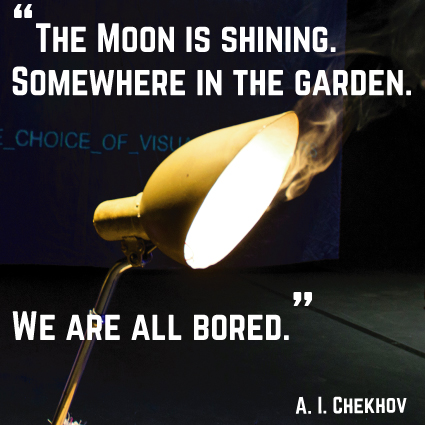
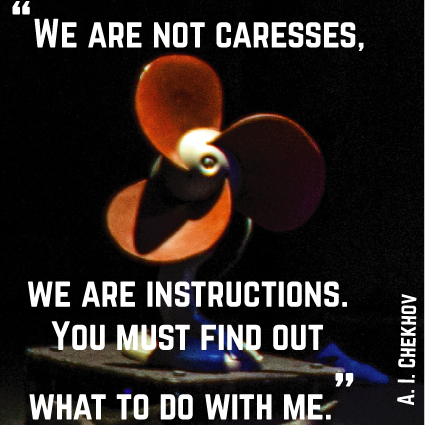
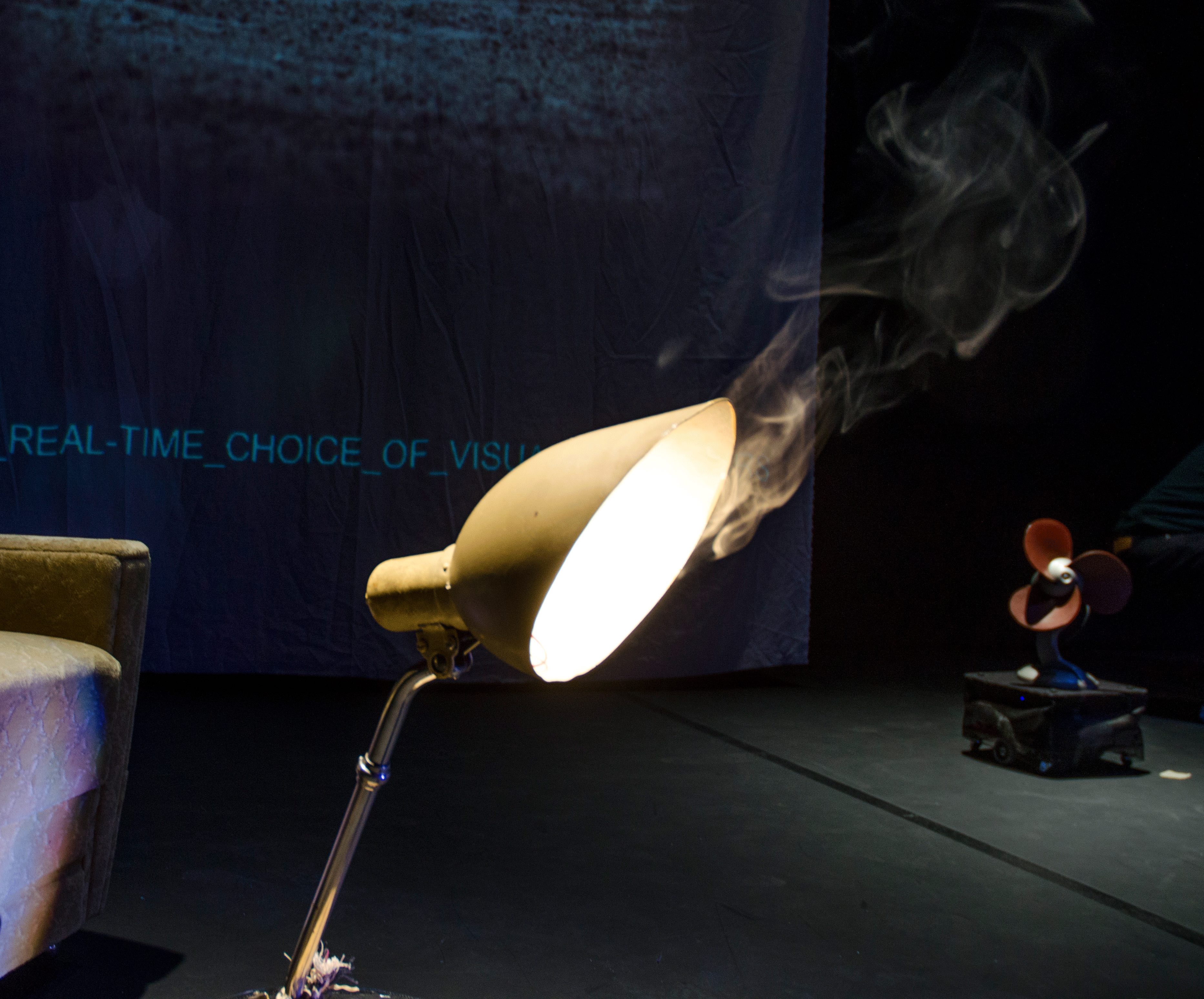
The performers themselves were simple household robots: a robotic vacuum cleaner, a lamp, a fan, and other everyday machines. They improvised on stage using voices integrated into the robots, while human spectators were invited into the auditorium.
Chekhov's characters spend much of their time talking about work, yet rarely do any. Household appliances, by contrast, exist only to work. In one scene, the robots stand together in the middle of the stage wondering what the purpose of it all might be; in another, they dream of travelling to Moscow.
The robots were given considerable autonomy, improvising on stage and making their own decisions whenever possible. Their metaphorical thinking could be guided while remaining spontaneous, meaning that the final result was never fully controlled. The artificial intelligence responded dynamically to both the actors' speech and their actions.
At the heart of the artistic research was the manipulation of relationships between three interconnected components: the original textual source (Chekhov's plays), the metadata used to explain the structure of the texts to machine-learning algorithms, and the machine-learning algorithms themselves.
"It's quite frightening to think that robots might one day take over poetry as well—the most deeply human thing we have," Keevallik concludes. "Everything else can be taken over."