
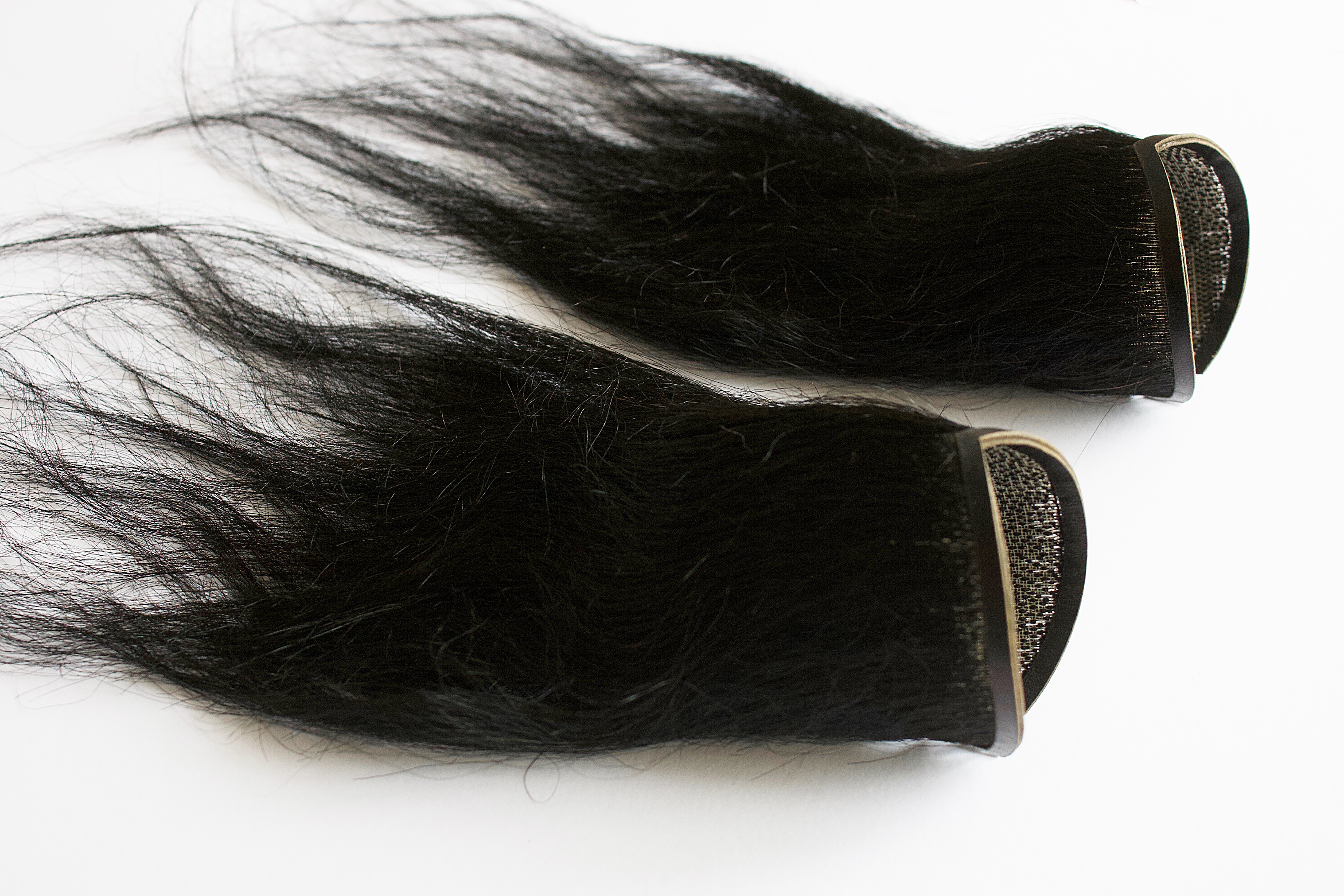
Human hair and body hair are remarkably durable - much like works of art. Portuguese artist Carla Castiajo uses them as materials for her jewellery.
Carla Castiajo was intrigued by what a material as provocative as human hair and body hair might reveal, and how it could be used in her artistic practice.
As part of her research, she exhibited her own pubic hair and invited visitors to touch it. Most declined. Hair and body hair can be perceived as attractive in one context, yet in another they may evoke the presence of another person, provoking discomfort or unease.
Castiajo explores these questions in her practice-based doctoral dissertation, Purity or Promiscuity? Exploring Hair as a Raw Material in Jewellery and Art.
Her research found that human hair is an exceptionally versatile raw material, offering a wide range of possibilities thanks to its flexibility and malleability.
"Hair as a material can carry many different, and often contradictory, meanings," Castiajo writes. "Once removed from the body, hair can evoke either attraction or repulsion."
Hair also functions as a powerful carrier of meaning, embodying memory, intimacy, and emotional attachment.
As part of her doctoral research, Castiajo conceived and curated three site-specific exhibitions in Tallinn. These took place in the chapel of St Catherine's Monastery, in a bathroom at Lembitu 3, and in the cemetery of Pirita Convent.
Through these exhibitions, she investigated human hair as a material derived from the body, examining the sensations it evokes and the often conflicting emotional responses it provokes. Her research combined artistic practice with critical reflection, analysing both the material itself and audiences' responses to her work.
Reflecting on her research, Castiajo concludes:
"Unlike the body itself, hair is durable. It helps us understand the world, raises questions, and offers new meanings."
