Sowing Disorder, Harvesting Knowledge
Marta Konovalov & Jane Remm
Tallinn Botanic Garden, Sensory Garden
Kloostrimetsa tee 52, Tallinn
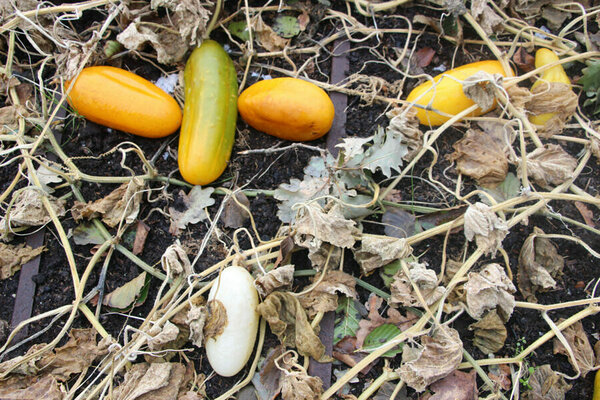
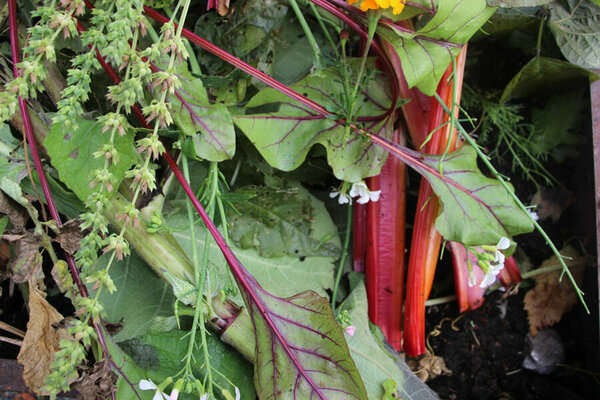
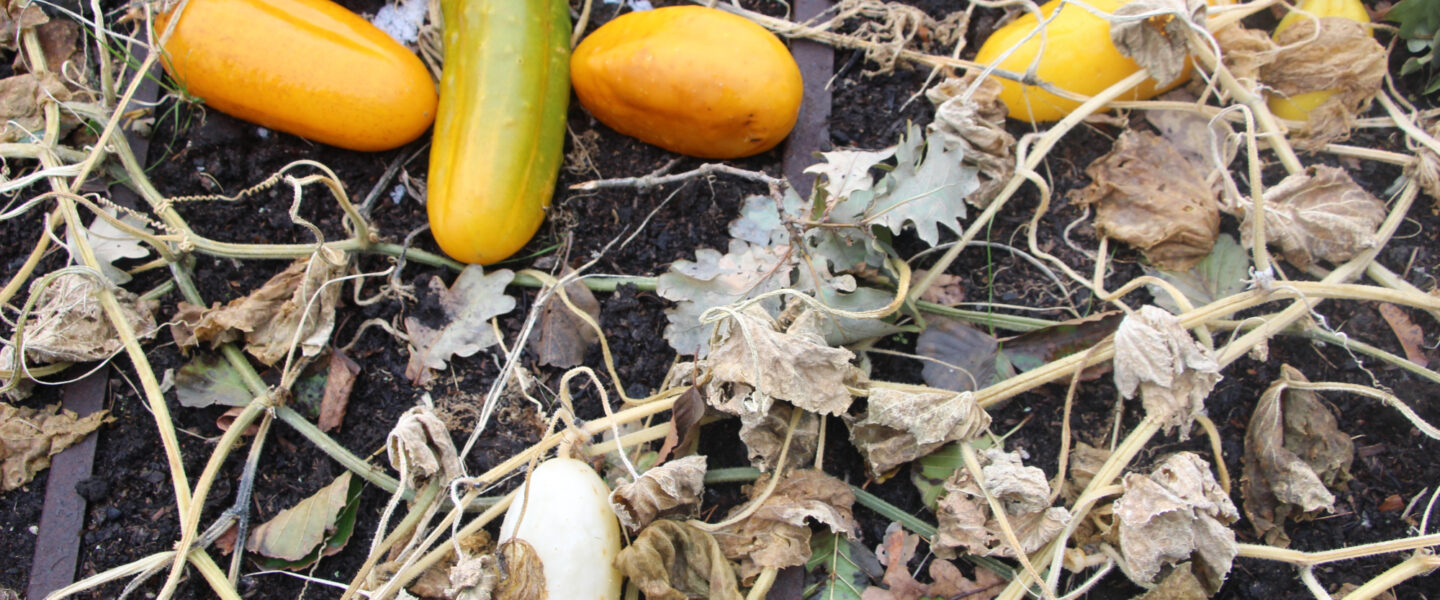
From October 2023 to March 2024, the central planting beds of the Sensory Garden at the Tallinn Botanic Garden become a living laboratory for exploring decay, regeneration, and the aesthetics of irregularity. The installation forms part of the Estonian Academy of Arts artistic research project Artists and Designers as Explorers, Interpreters, and Partners of Nature in the Context of Degrowth.
Designer Marta Konovalov and artist Jane Remm investigate how gardening, close observation of natural processes, and deliberate non-intervention can challenge conventional ways of working with landscapes and suggest new forms of coexistence with nature.
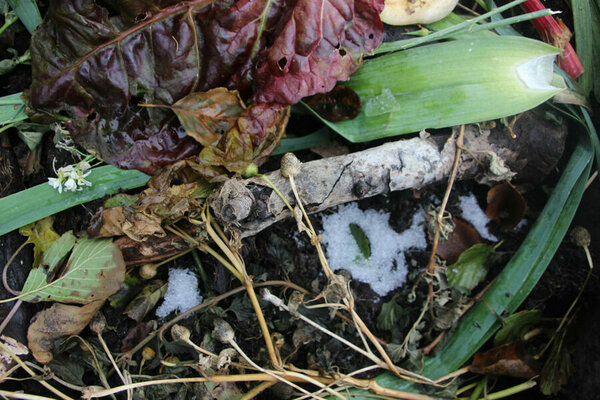
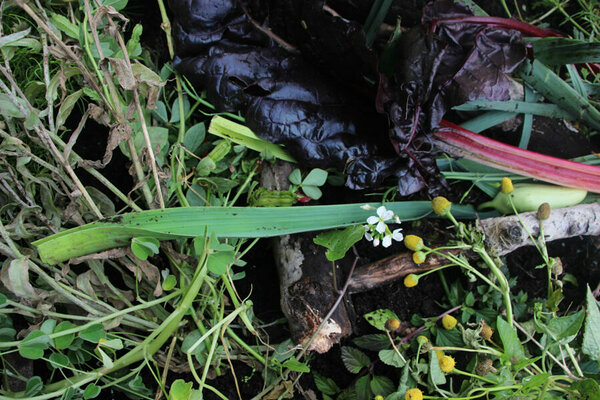
Rather than imposing order on the garden, they intentionally introduce disorder. They observe how plants escape carefully defined borders, how neglected materials become valuable resources, and how seemingly uncontrolled ecological processes reveal their own logic and beauty. Through artistic documentation and subtle interventions, the project celebrates an aesthetic that is tangled, incomplete, ever-changing, and constantly decomposing and renewing itself.
Underlying the project is a broader question: how can artists and designers contribute by doing less? Instead of control and optimisation, the project proposes slower, more collaborative and horizontal relationships between humans and the more-than-human world—an approach that resonates with the principles of degrowth.
Two Artistic Research Practices in Dialogue
The two planting beds function as distinct yet interconnected artistic research environments.
Marta Konovalov: Harvesting Knowledge
Konovalov's work revolves around knowledge harvesting, resourcefulness, regenerative textile design, and recognising value in what is usually dismissed as waste.
Her garden becomes a place where overlooked plant material, garden residues and other seemingly insignificant resources acquire new meaning through creative practice. Rather than importing materials, her work draws directly on resources generated within the Botanic Garden itself, allowing local ecological conditions to shape both process and outcome.
For Konovalov, repair is not about restoring something to its previous state. It is a creative act of transformation that allows materials—and our relationships with them—to continue evolving.
Jane Remm: Listening to Other Species
Jane Remm approaches the garden as a complex community of living beings rather than a designed landscape.
Flowers attract insects, seeds feed birds, roots intertwine with fungi, bacteria and countless invertebrates. These relationships become the subject of careful artistic observation.
Through drawing and painting, Remm documents what she describes as an interspecies social sculpture—a continuously evolving network of relationships between humans and other life forms. Visitors are invited to participate by drawing themselves, using observation as a way of slowing down and entering into dialogue with the garden.
Gardens in Conversation
The Sensory Garden does not exist in isolation.
Its processes remain in continuous dialogue with two regenerative gardens located at Rõõmu Farm and Saarde Farm. Together, these three sites form an extended artistic research environment in which ideas circulate between locations, seasons and ecological conditions.
The work will culminate in an exhibition at the Tallinn Botanic Garden Tropical House from January to March, before continuing as new exhibitions in the artists' own gardens in Viljandi County and Võru County.
Let's Sow Disorder
Visitors are invited to participate in the exhibition through a seed exchange.
Bring seeds collected from your own flowers or herbs and exchange them for others throughout the exhibition. Like the project itself, the seed exchange encourages diversity, unexpected encounters and the circulation of knowledge through living material.
Public Programme
The Beauty of Decay: Plant Patterns on Textiles and Traces on Paper
21 January | 11:30–13:30
Jane Remm introduces plant drawing as a method for cultivating deeper attention—to oneself, to plants and to relationships between living beings.
Visible Repair
28 January | 13:00–15:00
Marta Konovalov leads a workshop on mending worn knitwear using yarn naturally dyed with plants.
Heritage Seeds and Heritage Gardening
4 February
Tiia Morfin discusses the preservation and cultivation of heritage seed varieties and the cultural traditions they embody.
Modest Gardening
15 March
Marian Nummert introduces the principles of low-intervention gardening.
About the Artists
Marta Konovalov
Marta Konovalov is an artistic researcher, doctoral candidate in Artistic Research at the Estonian Academy of Arts, and Lecturer in the Department of Accessory and Book Design.
Her practice focuses on repair, regenerative textile design and circular material cultures. She approaches fashion not simply as clothing but as a system of making, consumption and relationships that requires redesign.
For Konovalov, repair is not about returning an object to its original condition. Instead, every repair adds a new layer to a garment's history, allowing both object and wearer to develop an ongoing relationship rather than one based on ownership and consumption.
CV: https://www.etis.ee/CV/Marta_Moorats/
Portfolio: www.taasloome.ee
Jane Remm
Jane Remm is an artist, educator and artistic researcher. She is a doctoral candidate in Artistic Research at the Estonian Academy of Arts and Lecturer in Art Didactics at Tallinn University's Baltic Film, Media and Arts School.
Her work investigates how humans experience nature and how artistic practice can foster communication with other species. Through drawing, painting and collaborative processes, she explores the possibility of engaging with non-human life as equal partners rather than passive subjects of observation.
She values making—alone, together and by hand—as a way of understanding oneself as part of larger ecological systems.
CV: https://www.etis.ee/CV/Jane_Remm/
Portfolio: www.janeremm.ee
Tallinn Botanic Garden
The Tallinn Botanic Garden is a scientific, educational and cultural institution dedicated to the conservation and interpretation of plant diversity.
Alongside its scientific mission, its distinctive landscape provides an exceptional setting for artistic experimentation, making it an ideal partner for projects that bring together ecology, research and contemporary art.
About the Research Project
Artists and Designers as Explorers, Interpreters, and Partners of Nature in the Context of Degrowth develops artistic research methods that encourage new ways of relating to nature by embracing restraint rather than constant production.
The project investigates how artists and designers can contribute to ecological thinking through practices of careful observation, reduced intervention and interspecies collaboration, thereby supporting the principles of degrowth and fostering greater ecological awareness.
Project duration: 1 July 2023 – 31 December 2024
Funded by: Ministry of Culture of Estonia