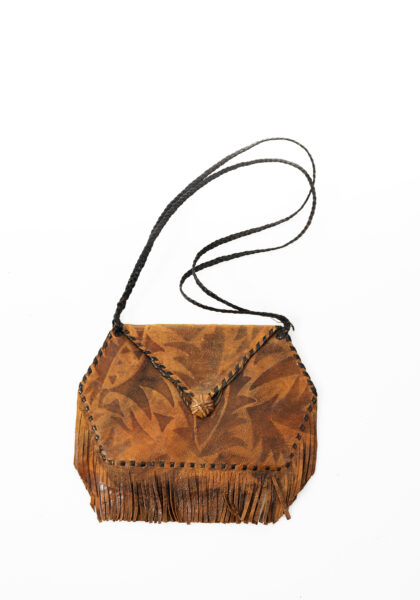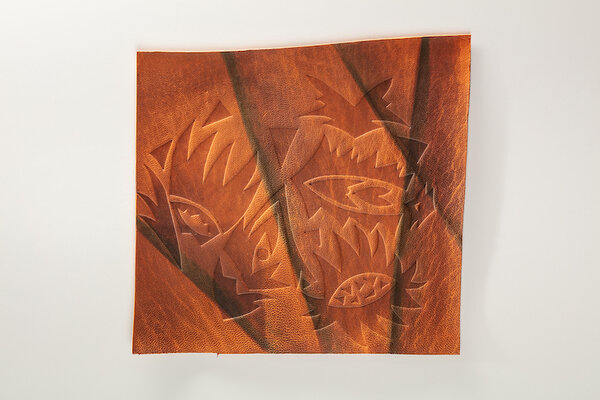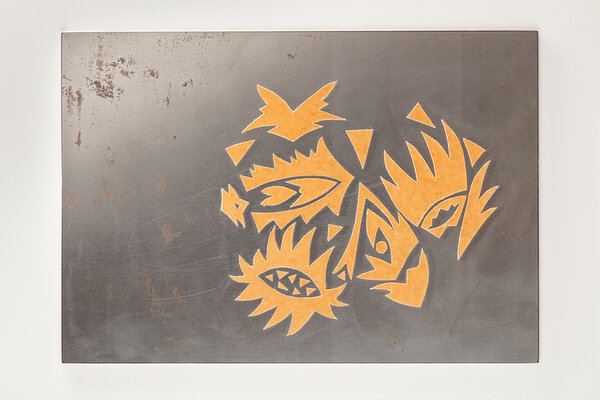
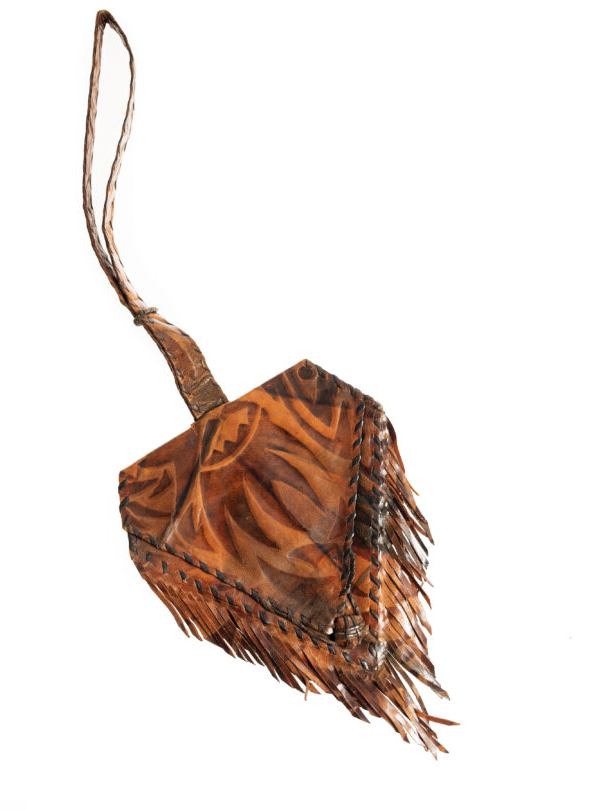
Flap Wrist Bag, 1924, Ed. Taska Studio, Tallinn, AM 15737/2
Photo: Meeli Küttim
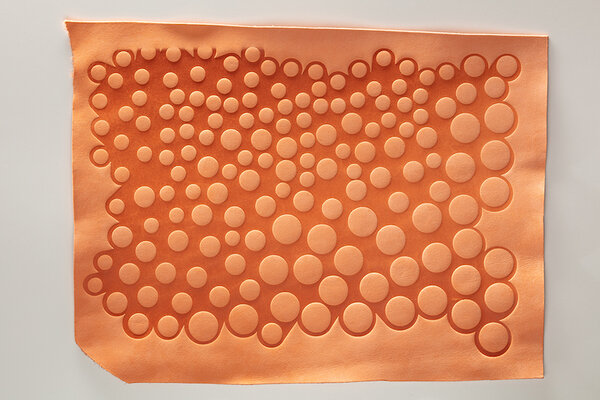
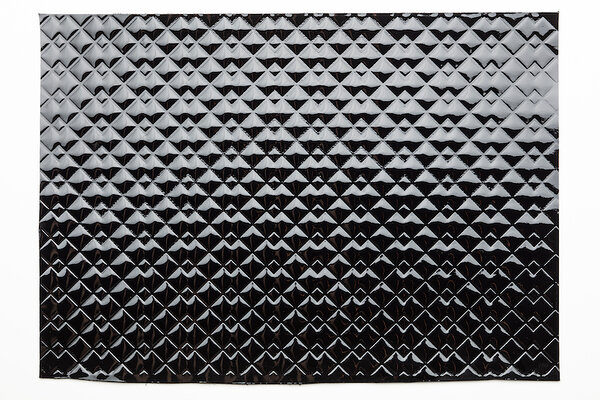
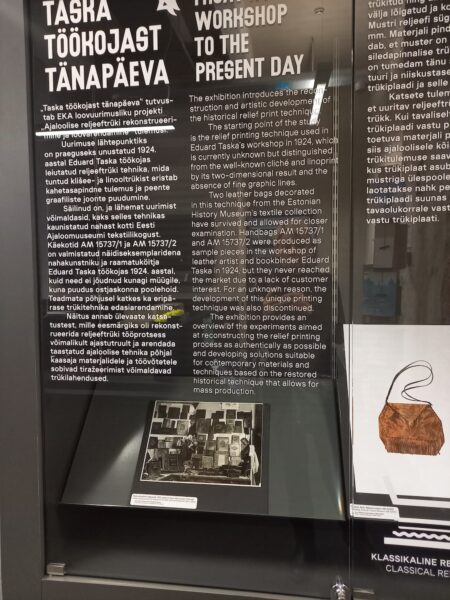
The artistic research project originated from an unidentified relief printing technique developed in 1924 at the workshop of leather artist and bookbinder Eduard Taska. Unlike conventional cliché or linocut printing, this technique produces a two-level embossed surface without fine graphic lines.
The research was made possible by two surviving leather handbags decorated using this technique (AM 15737/1 and AM 15737/2), preserved in the textile collection of the Estonian History Museum.
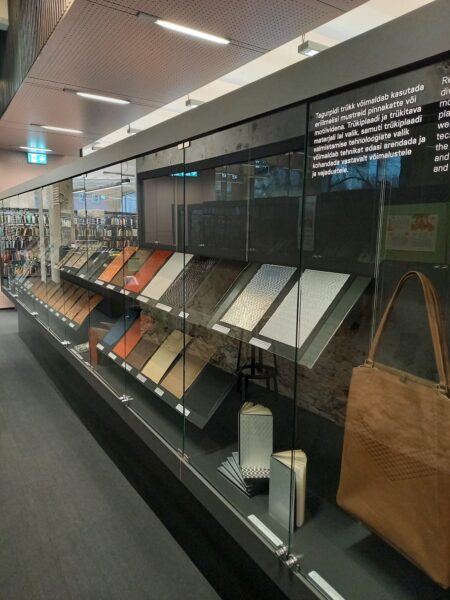
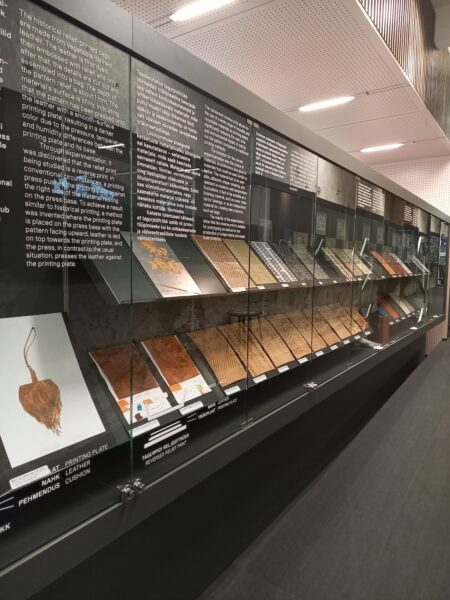
The project's objective was to reconstruct the historical relief-printing process as faithfully as possible and, based on the recovered technique, develop contemporary printing methods suitable for modern materials and production processes while enabling small-scale reproduction.
Experimental work led to the rediscovery of a technique the researchers call reverse printing. In conventional relief printing, the printing press presses the printing plate against the front side of the material resting on the press bed. In reverse printing, however, the printing plate is placed on the press bed with the pattern facing upwards. The material is then laid over the plate with its front surface facing the printing plate, and the press pushes the material onto the plate, effectively reversing the conventional printing arrangement.
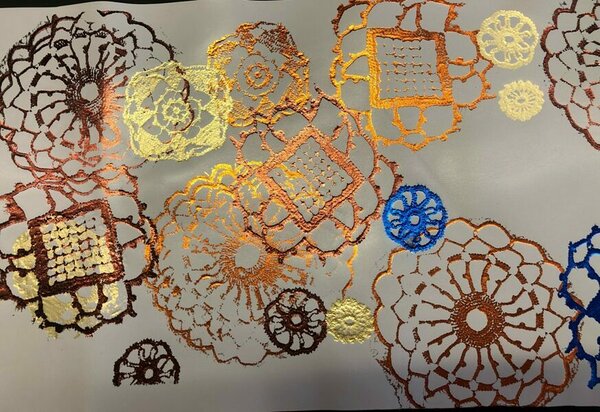
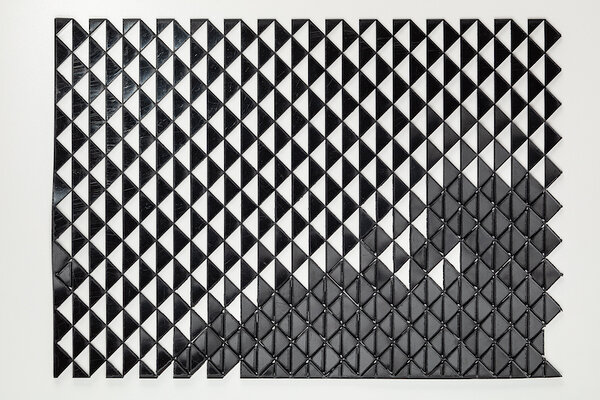
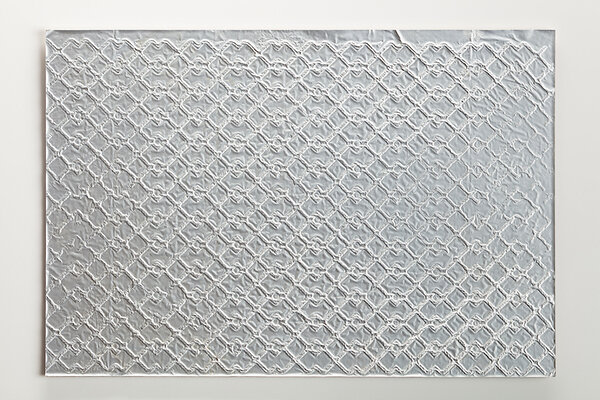
Reverse printing makes it possible to use a wide variety of reusable and recyclable materials as printing plates. The technique can produce both blind embossing and foil stamping on a range of different materials. The experiments conducted as part of this artistic research project demonstrate that reverse printing is well suited both to prototyping and to the production of unique objects and small-edition products.